
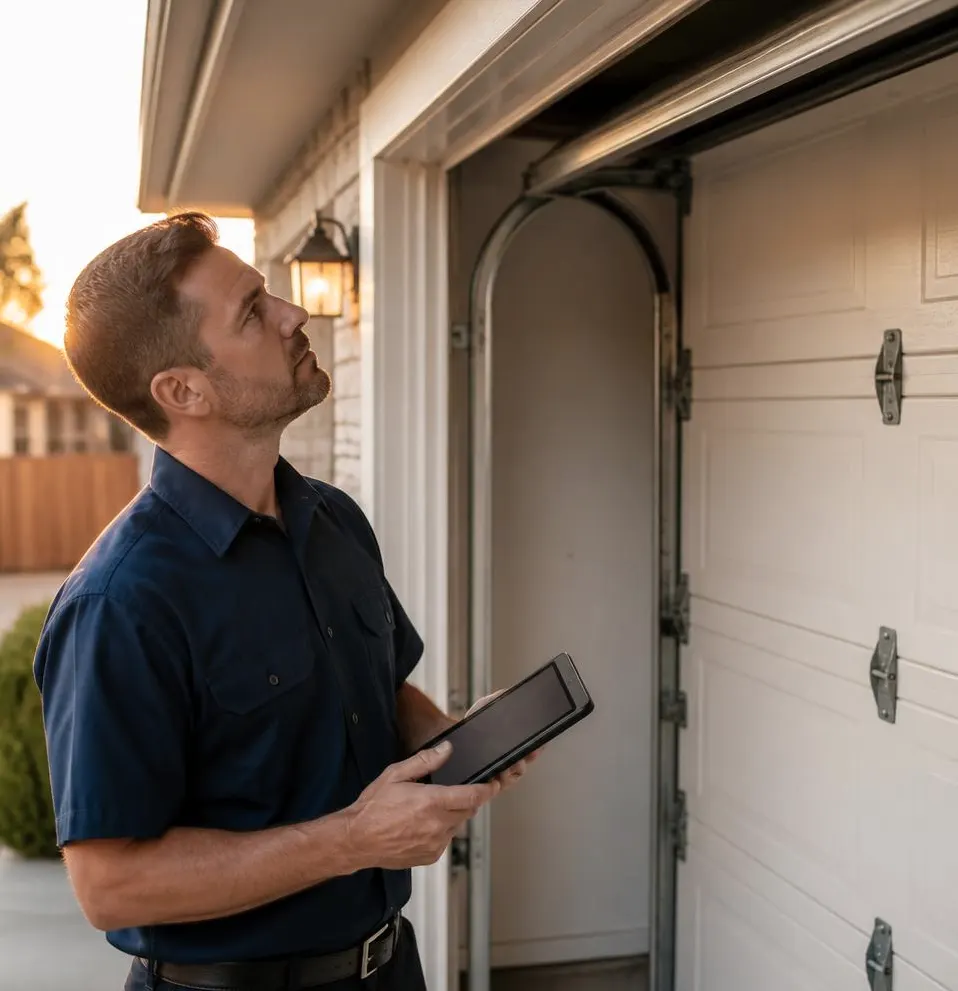
What a technician sees on these calls
On a typical service call about this, the homeowner points at the garage door and says something like, 'it's always hot in the laundry room.' The tech walks in, looks at the bottom seal, and finds daylight coming through in two or three spots. The weatherstripping along the sides is cracked and pulling away from the track. There's often a panel near the bottom that's slightly warped from sitting in humidity, and the door doesn't sit flush when it closes. None of that looks dramatic. But it's enough to let hot, humid outside air pour into the garage all afternoon, and if the garage is attached to the house, that heat doesn't stay in the garage.
How a leaky garage door actually affects your utility bill
An attached garage shares at least one wall, and usually a ceiling or a room above it, with the conditioned part of the house. If that garage runs 15-20 degrees hotter than the living space because hot air is leaking in around the door, your AC has to work harder to keep the adjoining rooms comfortable. Laundry rooms, mudrooms, and bedrooms above or next to the garage are usually the first place people notice it: warmer walls, a room that never quite cools down, the AC running longer cycles than it should.
In this part of Florida, the stakes are higher for a few reasons. Afternoon downpours and the long, humid summer push a lot of moist, warm air against that door for months at a time. Humidity swings make wood and composite panels swell and shrink, which is exactly what causes the warping and gapping a tech finds on these calls. And because doors here are built to meet wind-load requirements for storm season, the seals and hardware are doing real structural work, not just blocking a draft — when they wear out, the door doesn't just leak air, it loses some of the resistance it's supposed to have against wind-driven rain.
Signs the door itself is the problem
- You can see light around the edges or along the bottom when the door is closed
- Weatherstripping is cracked, flattened, or pulling loose from the track
- The bottom seal is torn, missing sections, or doesn't sit flat on the slab
- A panel looks slightly bowed or doesn't line up evenly with the ones next to it
- Rust spots on hinges, hardware, or the bottom corners after a rainy stretch
Real fixes, and the trade-offs
Weatherstripping and a new bottom seal are the cheapest fix and often the right first step — as a national ballpark, these parts and labor typically run well under $200. They solve the obvious air gaps but won't fix a warped panel or a door that's out of alignment, which can reopen those same gaps within a season.
Adding an insulation kit to the door panels helps slow heat transfer through the door itself, not just around the edges, and it's a reasonable middle-ground step if the door is otherwise in good shape. The bigger decision is whether to replace an older, non-insulated door entirely. That's a bigger upfront cost — nationally, insulated garage door replacement often runs from the low thousands up, depending on size and material — but it's the fix that actually changes how much heat moves through the door year-round, not just whether it seals tight today.
When to call Zellwood Garage Door
If you're seeing daylight around the door, feeling heat radiating off it, or noticing the garage never seems to cool down no matter how long the AC runs, it's worth having it looked at before you spend money guessing. Zellwood Garage Door can run a full tune-up — checking the seals, the track alignment, the balance, and the hardware — and tell you honestly whether weatherstripping and a seal replacement will solve it, or whether the door's age and condition mean cable and roller replacement or a full door replacement is the smarter long-term move.
If your garage is running hot and your AC bill backs it up, call Zellwood Garage Door for a straightforward inspection and a clear answer on what it'll take to fix it.