
The one-sentence rule
If your garage door has come off its track, stop operating it immediately and leave the springs, cables, and the door itself alone until someone qualified looks at it. The exceptions are narrow: if the door is blocking a vehicle someone needs to move right now, or if it's hanging halfway open and could fall further, get people and pets clear of the opening first, then stop. Don't try to "finish the job" by muscling it back into the track yourself.
How a door actually comes off track
A few things usually cause it. A roller wears out or snaps and the panel drifts sideways out of the channel. A cable frays or slips off the drum, so one side of the door drops while the other stays up, twisting the whole assembly. A car bumper or a stray branch during an afternoon storm knocks the bottom panel hard enough to pop it loose. And in this part of Florida, humidity plays its own role: tracks that sit in a damp garage can develop surface rust, wood or composite doors can swell slightly, and that extra friction is sometimes enough to make a door bind and jump the track instead of sliding smoothly.
Wind matters too. Zellwood and the surrounding area see real wind-load stress during hurricane season, and a door that's already a little misaligned is far more likely to rack sideways under gusts than one that's properly tensioned and tracked.
How bad it can get
A door off its track isn't just cosmetic. The springs are still under heavy tension even when the door looks "stuck," and that stored energy doesn't go away because the panel derailed. If a cable has slipped or frayed, the door can drop suddenly and without warning. Panels can bend, the opener's motor and gears can get strained trying to pull against a door that isn't moving freely, and rollers or hinges can shear off entirely. None of that is a job for pliers and a Saturday afternoon — this is one of the few garage door problems that genuinely belongs in the "stop and call someone" category rather than the "try it yourself" one.
What to do right now
- Unplug or disconnect the opener. If the door is partway open and you can safely reach the release cord, pull it to disconnect the carriage from the opener so the motor doesn't keep forcing a door that's already off track.
- Keep the area clear. Move cars, kids, and pets away from the opening. A door off its track can shift further on its own, especially if it's already unbalanced.
- Don't lift, shove, or pry it back into the track. It looks like it should just slide back in. It usually won't, and if a spring is involved, the amount of force stored up can cause real injury.
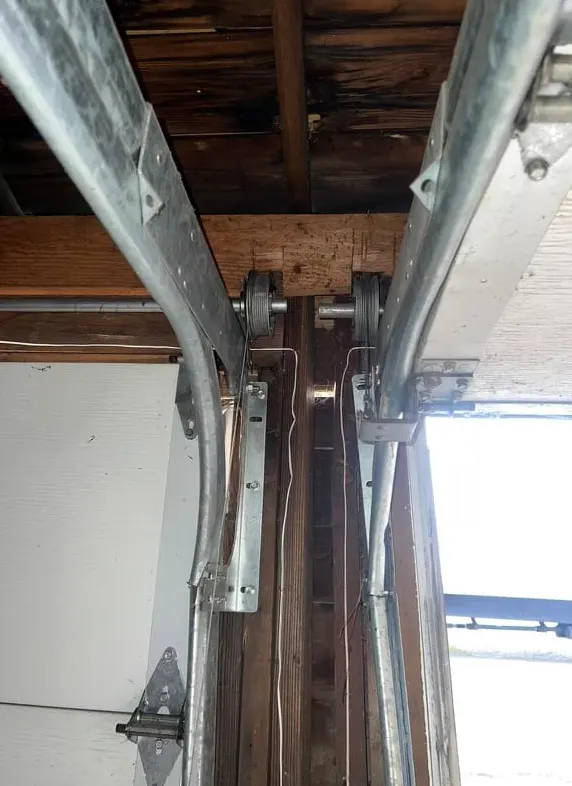
- Don't cut or loosen any cables, even if they look slack or tangled. A cable that appears loose can still be under partial tension.
- Leave the springs completely alone. Torsion springs especially can release violently if disturbed by someone without the right tools.
- Note what you see — which side dropped, whether a roller is visibly broken, whether a cable is off the drum. That information helps a technician diagnose the problem faster over the phone and arrive with the right parts.
When to call Zellwood Garage Door
This is exactly the kind of problem our Off Track Door Repair service handles: we re-seat the door safely, check the tracks for warping or rust damage, and inspect rollers, hinges, and cables for the underlying cause rather than just shoving the panel back in place. If a worn roller or a frayed cable caused the derailment, we'll usually recommend Cable & Roller Replacement at the same visit so the same failure doesn't happen again on the next humid, storm-heavy day. We serve Zellwood, Apopka, Mount Dora, Tangerine, Plymouth, Sorrento, Eustis, and Tavares, and we show up ready to diagnose and fix it, not just patch it.
If your garage door has jumped its track, don't wait and don't improvise — call Zellwood Garage Door and we'll get it back on track safely, the first time.